

At the tap of his food bowl, he came running. As he grew, he learned to recognize the sound. No surprises there—at just 35 days old, his tiny brain was already drawing on hundreds of years of ancestral memory, encoded in his DNA. He wasn’t learning; he was remembering. It was all already in him.
But his health began to deteriorate. After nearly 33 days of a healthy life, small nodes began to appear—first near his eye, then on his wings, and eventually on his chest. He stopped fluttering. He just sat still.
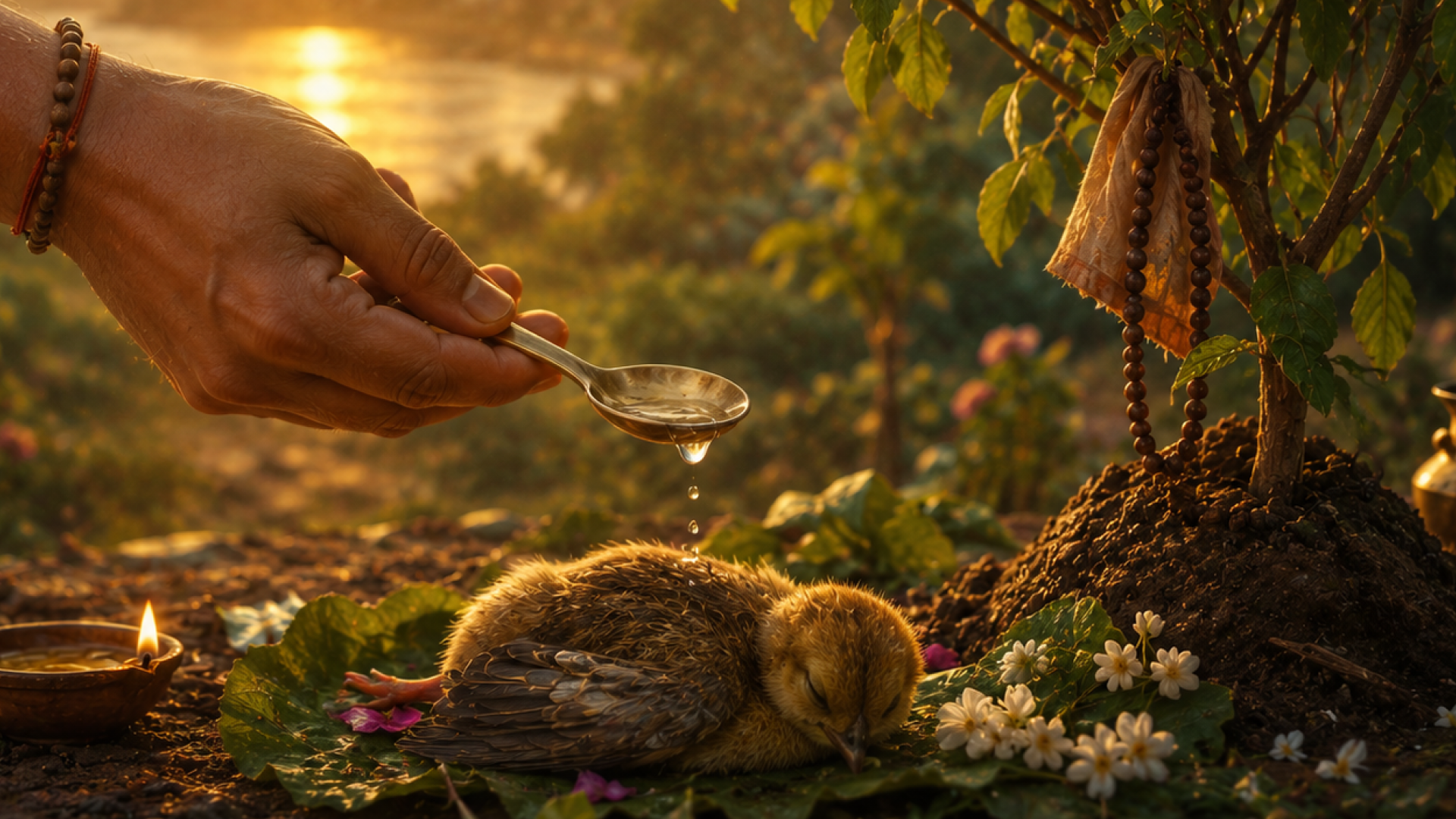
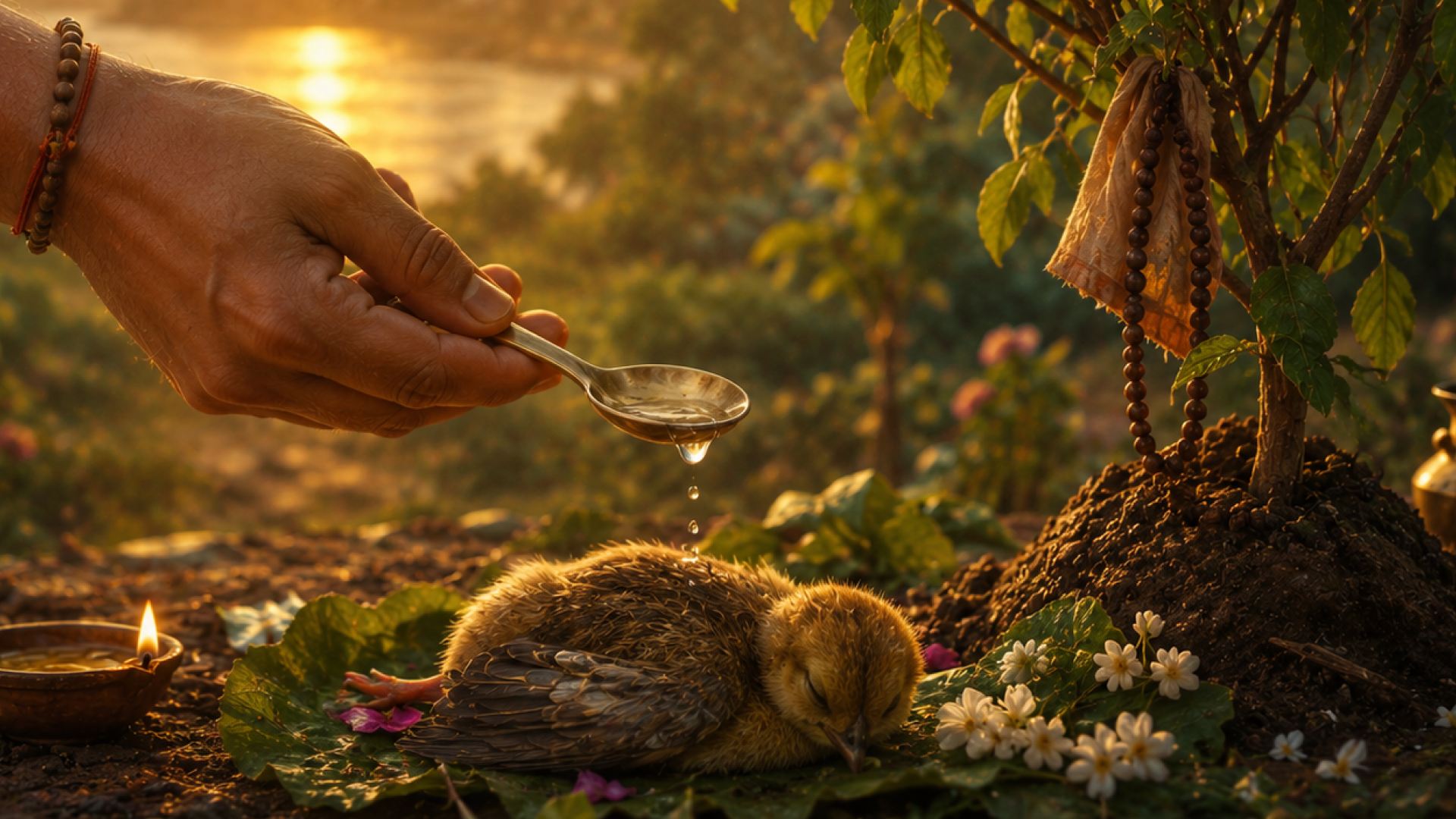
It got worse. I knew then that he was leaving. I gave him a few drops of the holy water from the river Ganga, hoping its sacred purity might ease his pain and guide him toward the eternal light, where suffering doesn’t reach. I placed him gently under the Tulsi bush, offering him a softer bed beneath its sacred leaves.
Now, in the morning light, as the sun rises strong and exalted in the east, he takes his final breaths.
I sit there, thinking about how he had survived that fall as a newborn chick. Why, then, was he given less than two months on this Earth?
Was this a karmic return of a soul—repaying some old, unfinished debt?
Was he a pure soul who simply came to settle something small and then return?
Hindus believe that the cycle of birth stretches across millions of lifetimes, and that a human birth is a rare blessing—one we must honor by aligning thought, word, and deed in the right direction.
As I watched him, it suddenly dawned on me: only a pure soul could receive the drops of the Ganga and rest beneath the Tulsi bush.
I wasn’t just watching a chick die.
I was witnessing a saint change garments, preparing for the next journey.
Previous Story
Time Is Not the Sole Robber
Next Story